So you’ve narrowed it down to the Annapurna region—excellent choice. Now comes the next big decision: Annapurna Base Camp (ABC) or the full Annapurna Circuit?
Both treks showcase the best of Nepal’s mountains and culture, but they offer fundamentally different experiences. One is a focused journey into a mountain sanctuary; the other is an epic loop around an entire massif. Choosing the wrong one can mean either biting off more than you can chew or missing the adventure you’re really seeking.
Here’s everything you need to know to make the right call.
At a Glance: The Quick Comparison
| Feature | Annapurna Base Camp (ABC) | Annapurna Circuit |
|---|---|---|
| Duration | 7–12 days | 14–20 days |
| Distance | 70–115 km | 160–230 km |
| Max Elevation | 4,130m (ABC) | 5,416m (Thorong La Pass) |
| Difficulty | Moderate | Challenging |
| Scenery | Intimate, lush, close-up peaks | Diverse, dramatic, ever-changing |
| Cultural Focus | Gurung & Magar villages | Hindu to Tibetan Buddhist transition |
| Best For | Beginners, time-limited trekkers | Adventure seekers, experienced trekkers |
| Permits | ACAP + TIMS ($50) | ACAP + TIMS ($50) |
The Annapurna Base Camp Trek: Into the Sanctuary

Photo by Redmaz Pham on Unsplash
What Makes It Special
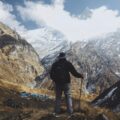
The Annapurna Base Camp trek is all about getting inside the mountains. You don’t just look at Annapurna—you walk into its embrace, ending in a natural amphitheater surrounded by towering peaks on all sides .
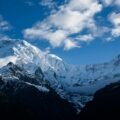
At 4,130 meters, you’ll stand in the Annapurna Sanctuary, a glacial basin ringed by giants like Annapurna I (8,091m), Machhapuchhre (Fishtail), Hiunchuli, and Annapurna South. The mountains are so close they feel almost within reach .
The Experience
The trail winds through:
- Lush rhododendron forests that explode in color during spring (March–May)
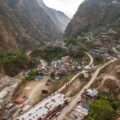
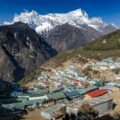
- Traditional Gurung villages like Ghandruk and Chhomrong, where you’ll experience warm hospitality and maybe hear stories of Gurkha soldiers
- Bamboo groves and waterfalls that make the lower sections feel like a jungle trek
- Natural hot springs at Jhinu Danda—perfect for soaking tired muscles after reaching Base Camp
Most trekkers include a sunrise visit to Poon Hill (3,210m), one of Nepal’s most famous viewpoints, offering panoramic views of Dhaulagiri and Annapurna .
Difficulty Level
ABC is considered a moderate trek, suitable for beginners with basic fitness . The main challenges are:
- Steep stone staircases (especially the 3,000+ steps at Ulleri)
- Daily walking of 5–7 hours
- Altitude that’s manageable but still requires attention
Because the highest point is only 4,130m, altitude sickness is less common than on the Circuit, though still possible .
Sample Itinerary (10 Days via Ghorepani)
| Day | Route | Highlights |
|---|---|---|
| 1 | Drive Pokhara to Nayapul, trek to Ghandruk | Gurung village, mountain views |
| 2 | Ghandruk to Tadapani | Rhododendron forests |
| 3 | Tadapani to Ghorepani | Forest trails |
| 4 | Early morning Poon Hill, trek to Sinuwa | Sunrise panorama |
| 5 | Sinuwa to Deurali | Bamboo forests, waterfalls |
| 6 | Deurali to ABC via MBC | Enter the Sanctuary |
| 7 | ABC to Bamboo | Sunrise at Base Camp |
| 8 | Bamboo to Jhinu Danda | Hot springs |
| 9 | Jhinu Danda to Nayapul, drive to Pokhara | Final day |
| 10 | Rest in Pokhara | Recovery by Phewa Lake |
Costs
- Permits: ACAP ($30) + TIMS ($20) = $50
- Daily expenses: $25–35 per day for food and accommodation
- Guided package: $550–1,000 depending on service level
- Total (10 days): Approximately $400–700
The Annapurna Circuit: The Epic Loop

Photo by mo jiaming on Unsplash
What Makes It Special
The Annapurna Circuit trek is a classic Himalayan journey that circles the entire Annapurna massif. National Geographic named it one of the world’s top ten trekking routes, and for good reason .
The highlight is crossing Thorong La Pass at 5,416 meters—one of the highest trekking passes on Earth. Standing at the top after days of climbing, surrounded by snow peaks and prayer flags, is a moment most trekkers describe as life-changing .
The Experience
Unlike ABC’s focused journey, the Circuit offers incredible diversity:
- Start in lush farmland with rice terraces and Hindu villages
- Climb through alpine forests to Tibetan-influenced highlands
- Cross the barren, wind-swept Thorong La Pass
- Descend into Mustang’s desert-like landscape—dry, rugged, and almost otherworldly
- Walk through apple orchards in Marpha, famous for its apple brandy
No two days look the same. You’ll experience everything from subtropical jungle to high-altitude desert, with glaciers, gorges, and plateaus in between .
Cultural Journey
The Circuit is also a journey through Nepal’s cultural diversity:
- Lower sections feature Hindu temples and villages
- Higher up, you enter Tibetan Buddhist territory with monasteries, prayer flags, mani walls, and yak caravans
- Manang and the Mustang region feel like stepping into Tibet
Difficulty Level
The Annapurna Circuit is challenging and requires good physical preparation . Key factors:
- Longer duration: 14–20 days on trail
- Higher altitude: Thorong La at 5,416m requires careful acclimatization
- Longer days: Some days involve 7–8 hours of trekking
- Remote sections: Facilities become more basic at higher elevations
Proper acclimatization is essential. Most itineraries include an extra night in Manang (around 3,500m) to help your body adjust before attempting the pass .
Thorong La Pass Day
The pass crossing is the trek’s biggest challenge:
- Most trekkers start at 4 AM in freezing temperatures
- The climb is steep and the air is thin
- Reaching the top (5,416m) brings an overwhelming sense of accomplishment
Sample Itinerary (15 Days)
| Day | Route | Elevation |
|---|---|---|
| 1 | Drive Kathmandu to Besisahar | 760m |
| 2 | Besisahar to Chamje | 1,430m |
| 3 | Chamje to Dharapani | 1,860m |
| 4 | Dharapani to Chame | 2,710m |
| 5 | Chame to Pisang | 3,250m |
| 6 | Pisang to Manang | 3,540m |
| 7 | Acclimatization day in Manang | 3,540m |
| 8 | Manang to Yak Kharka | 4,050m |
| 9 | Yak Kharka to Thorong Phedi | 4,450m |
| 10 | Cross Thorong La to Muktinath | 5,416m → 3,800m |
| 11 | Muktinath to Marpha | 2,670m |
| 12 | Marpha to Kalopani | 2,530m |
| 13 | Kalopani to Tatopani | 1,190m |
| 14 | Tatopani to Ghorepani | 2,850m |
| 15 | Ghorepani to Poon Hill to Pokhara | 3,210m → 820m |
Costs
- Permits: ACAP ($30) + TIMS ($20) = $50
- Daily expenses: $25–35 per day (accommodation often free if you eat meals there)
- Guided package: $1,500–2,500 depending on service
- Solo budget trekker total (13-15 days): Approximately $450–550
Side-by-Side: Key Differences
Scenery
ABC: Intimate and lush. You’re surrounded by peaks at the end, but much of the trek is through forests and farmland. The rhododendron blooms in spring are spectacular .
Circuit: Epic variety. You’ll see everything from subtropical jungle to high-altitude desert, with glaciers, gorges, and plateaus in between .
Winner: Circuit for variety; ABC for focused, intimate mountain views.
Difficulty
ABC: Moderate. Most fit beginners can complete it with proper preparation. The altitude is manageable (4,130m max) .
Circuit: Challenging. Longer days, higher altitude (5,416m), and the Thorong La crossing demand good fitness and endurance .
Winner: ABC for beginners; Circuit for those seeking a challenge.
Culture
ABC: Gurung and Magar villages with warm hospitality. You’ll stay in family-run teahouses and experience traditional mountain life .
Circuit: A cultural journey from Hindu lowlands to Tibetan Buddhist highlands. Manang and Mustang feel distinctly Tibetan, with monasteries and prayer flags .
Winner: Circuit for cultural variety; ABC for intimate village experiences.
Time Commitment
ABC: 7–12 days total. Fits into a two-week Nepal trip including travel days .
Circuit: 14–20 days. Requires at least three weeks in Nepal to do comfortably .
Winner: ABC for those with limited time.
Best Time to Go
Both treks are best in spring (March–May) and autumn (September–November) .
Important distinction: The Annapurna Circuit’s Thorong La Pass can be closed in winter (December–February) due to heavy snow. ABC remains accessible year-round, though cold .
Which One Should You Choose?
Choose Annapurna Base Camp If:
- You have 7–12 days for trekking
- You’re a beginner or have limited high-altitude experience
- You prefer lush, green landscapes over barren highlands
- You want close-up mountain views without extreme altitude
- You’re on a moderate budget ($400–700)
- You want to experience Gurung culture up close
Choose Annapurna Circuit If:
- You have 14–20 days for trekking
- You’re physically fit and ready for a challenge
- You want diverse landscapes—from jungle to desert
- You dream of crossing a high Himalayan pass (5,416m)
- You’re interested in Tibetan Buddhist culture
- You have a higher budget or more time to spend on trail
A Note on Guided vs. Independent Trekking
Since 2023, licensed guides are required for trekking in Nepal’s major routes, including both ABC and the Annapurna Circuit . This is actively enforced, so factor guide costs into your budget:
- Guide: $25–35 per day
- Porter: $20–25 per day (can carry up to 20–25 kg)
Most trekkers find that having a guide enhances the experience—they handle logistics, provide cultural insights, and ensure your safety at altitude.
Why Not Both?
Here’s a secret that experienced trekkers know: you don’t have to choose. The Annapurna region is so spectacular that many people return multiple times.
Some trekkers start with ABC as a “warm-up” and return years later for the Circuit. Others combine sections—you can add the Poon Hill side trip to the Circuit, or extend ABC with a detour to nearby villages.
If you’re truly torn, consider this: the Annapurna Circuit via Nar Phu Valley and Kang La Pass offers a route that blends both experiences—remote valleys, high passes, and the classic Circuit experience .
Final Thoughts
Both the Annapurna Base Camp trek and the Annapurna Circuit are world-class adventures that will leave you with memories for a lifetime.
If you’re new to high-altitude trekking, short on time, or simply want to stand inside a mountain amphitheater surrounded by giants—choose ABC.
If you’re ready for a longer commitment, want to experience Nepal’s incredible landscape diversity, and dream of crossing one of the world’s highest trekking passes—choose the Circuit.
Either way, you’re in for something extraordinary. The Annapurna region has a way of calling people back, so whichever you choose now, the other will likely be waiting for you on a future adventure.
The mountains are calling. Which path will you answer?
Note: Permits, costs, and regulations are current as of 2026. Always verify requirements with a registered trekking agency before departure. Both treks require licensed guides—factor this into your planning.