High in the Nepalese Himalayas, nestled beneath the massive peak of Tilicho, lies a lake that seems too beautiful to be real. At 4,919 meters (16,138 feet), Tilicho Lake holds the title of the highest glacial lake in the world . Located in the Manang district within the Annapurna Conservation Area, it is both a sacred site for pilgrims and a challenging adventure destination for trekkers seeking something beyond the usual trails .
The trek to Tilicho is often described as a journey through a “lunar landscape”—barren, rocky, and utterly breathtaking. But between the high passes and the thin air lies a world of turquoise water, towering peaks, and deep spiritual calm .
Part 1: Why Tilicho Lake Is Special
Tilicho Lake isn’t just another high-altitude lake. It stands apart because of its elevation (4,919 m), its color, and its remoteness. Fed by the glaciers of Tilicho Peak (7,134 meters), the lake appears as a sapphire jewel surrounded by harsh, frozen terrain .
Key Facts at a Glance
| Feature | Detail |
|---|---|
| Altitude | 4,919 m (16,138 ft) |
| Location | Manang District, Annapurna Region |
| Status | World’s Highest Glacial Lake |
| Religious Significance | Sacred to both Hindus and Buddhists |
| Best Season | Spring (Mar–May) & Autumn (Sep–Nov) |
Spiritual Significance
For local communities and pilgrims, Tilicho Lake is not just a geographical wonder; it is a holy site. In Hindu mythology, it is associated with the sacred Ramayana epic, while Buddhists revere the area as a place of divine connection . The nearby village of Khangsar and the monastery trails reinforce the deep Tibetan-Buddhist culture of the region .
Part 2: The Trekking Experience

Photo by Dipesh Manandhar on Unsplash
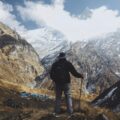
The trek to Tilicho Lake is an off-the-beaten-path adventure that branches off from the famous Annapurna Circuit. Because of the altitude and terrain, the trek is considered challenging, but it is achievable for those who are physically fit and well-prepared .
The Route & Accommodation
Starting Point:
Most trekkers begin their journey in Besisahar. From there, you travel through the dramatic Marsyangdi Valley to Manang, the main acclimatization hub .
The “Detour”:
Unlike the standard Circuit route which goes directly to Thorong La, the Tilicho trip takes a detour via Khangsar Village (3,734 m). From Khangsar, the trail leads to Tilicho Base Camp (4,200 m) .
Accommodation:
- Teahouses: The region supports a “teahouse trek.” You will sleep in basic lodges with twin beds and shared bathrooms .
- Heating: Common areas usually have a wood-burning stove (perfect for gathering at night), but bedrooms are unheated .
- Hot Showers: Available for a fee in Lower Manang, but rare above 4,000m .
What to Eat: The Fuel
Food options become limited as you gain altitude. Dal Bhat (rice, lentil soup, and vegetables) is the staple because it is high in energy and carbohydrates .
- Breakfast: Oatmeal, pancakes, eggs, or Tibetan bread.
- Lunch/Dinner: Dal Bhat, noodles, potato dishes, pasta, and garlic soup (highly recommended for altitude sickness) .
- Warning: Avoid eating meat above Manang. Fresh meat does not exist up there; supplies are carried by mules without refrigeration .
Part 3: The Difficulty & The Dangers

Photo by Arun Ghimire on Unsplash
Reaching Tilicho Lake is a severe physical test. The final ascent is notorious for being mentally draining and physically punishing.
1. High Altitude (AMS Risk)
Acute Mountain Sickness is a real threat. The trail passes 4,000 meters for days. It is mandatory to spend at least two nights acclimatizing in Manang (3,540m) before proceeding to Khangsar .
2. The “Landslide Zone”
The trail between Khangsar and Base Camp cuts across steep, loose slopes. The path is often barely wide enough for one person. A fall could be fatal. You must watch for falling rocks from the cliffs above, especially in the afternoon when the sun loosens the ice and stone .
3. The Final Ascent
From Base Camp (4,200m) to the Lake (4,919m), there is a vertical climb of 700 meters. It is steep, icy in the morning, and includes a section of 22 hairpin bends known as “22 Ghumti” . Because of the thin air, this relatively short climb can take 3-4 hours of non-stop struggle.
Part 4: When to Go – Weather & Seasons
Choosing the right time to visit Tilicho Lake is critical for safety and visibility. The lake sits in a rain shadow (the mountains block monsoon clouds), so it gets less rain than Pokhara, but the trails are still dangerous when wet .
Seasonal Breakdown
| Season | Months | Weather | Conditions | Verdict |
|---|---|---|---|---|
| Spring | Mar – May | Mild days (5°C to 15°C). Clear mornings. | Rhododendrons bloom below; snow melts above. Stable. | Highly Recommended |
| Autumn | Sep – Nov | Crisp, clear skies. Dry trails. Cold nights. | Best mountain views. Least risk of landslides. | Best Time |
| Winter | Dec – Feb | Extreme cold (-10°C to -20°C). | Lake frozen solid. Trails snow-covered. Lodges closing. | Not Recommended |
| Monsoon | Jun – Aug | Rain, fog, humidity. | Trails slippery. High risk of landslides. Low visibility. | Avoid |
Tip: Even in Spring, the lake may be frozen (it stays frozen for up to six months of the year) . However, the surrounding peaks reflected in the ice are still magical.
Part 5: Logistics & Practical Info
How to Get There
- Kathmandu/Pokhara to Besisahar: 6–8 hour drive (bus or jeep) .
- Besisahar to Manang: Trek or drive (roads now extend, but trekking is better for acclimatization) .
- Manang to Khangsar: 3–4 hours walk.
- Khangsar to Tilicho Base Camp: 5–6 hours walk.
- Base Camp to Tilicho Lake: 3–4 hours climb (and 1.5 hours down) .
Permits Required
You will need the standard Annapurna permits :
- ACAP Permit (Annapurna Conservation Area): NPR 3,000 (~USD 25)
- TIMS Card (Trekkers’ Information Management System): NPR 2,000 (~USD 15)
Packing Essentials
Packing for survival is key. Nights are freezing even in summer.
- Gear: Down jacket, thermal base layers, fleece, waterproof jacket/pants.
- Feet: Sturdy, waterproof boots (broken in!). Microspikes are essential if there is snow/ice on the final climb.
- Support: Trekking poles are non-negotiable for the scree slopes .
- Health: Water purification tablets (tap water is available but needs treatment), Diamox (for altitude), sunscreen, lip balm.
Part 6: A Typical 7-Day Tilicho Itinerary
Most treks combine Tilicho with a shortened Annapurna Circuit or as a specific out-and-back route. Here is a sample itinerary:
- Day 1: Drive Kathmandu to Besisahar or Chame.
- Day 2: Drive/Trek to Pisang (3,200m).
- Day 3: Trek to Manang (3,540m) – Views of Annapurna II .
- Day 4: Acclimatization Day in Manang (hike to Gangapurna Lake or Ice Lake).
- Day 5: Trek to Khangsar (3,750m) or directly to Tilicho Base Camp (4,200m).
- Day 6: Summit Day! Climb to Tilicho Lake (4,919m) early morning. Descend back to Base Camp or Khangsar.
- Day 7: Trek back to Manang and drive/trek out.
Part 7: Protecting the Lake
One sobering reality is that plastic trash has followed trekkers even to this remote altitude. The fragile ecosystem of the lake is threatened by water bottles and wrappers . It is our responsibility as visitors to carry out everything we carry in. Let’s keep the “highest lake in the world” as pure as the snow that feeds it.
Final Verdict
Tilicho Lake is not just a trek; it is an expedition into the extremes. You will suffer from the cold, the steep climbs, and the fear of rockfalls. But standing on the shore of that turquoise (or frozen) lake, surrounded by peaks that look like they belong on another planet, you will know why you came .
Is it worth it?
The icy trails, the sleepless nights, and the risk of altitude sickness are intimidating. However, the silence of the frozen lake and the overwhelming sense of achievement make Tilicho Lake an unforgettable bucket-list destination .
Planning a visit to Tilicho Lake? Start with a few days of trekking at lower altitudes to acclimatize, hire a licensed guide (mandatory for restricted zones), and invest in quality gear. The world’s highest lake is waiting. Feel free to contact us for more details.