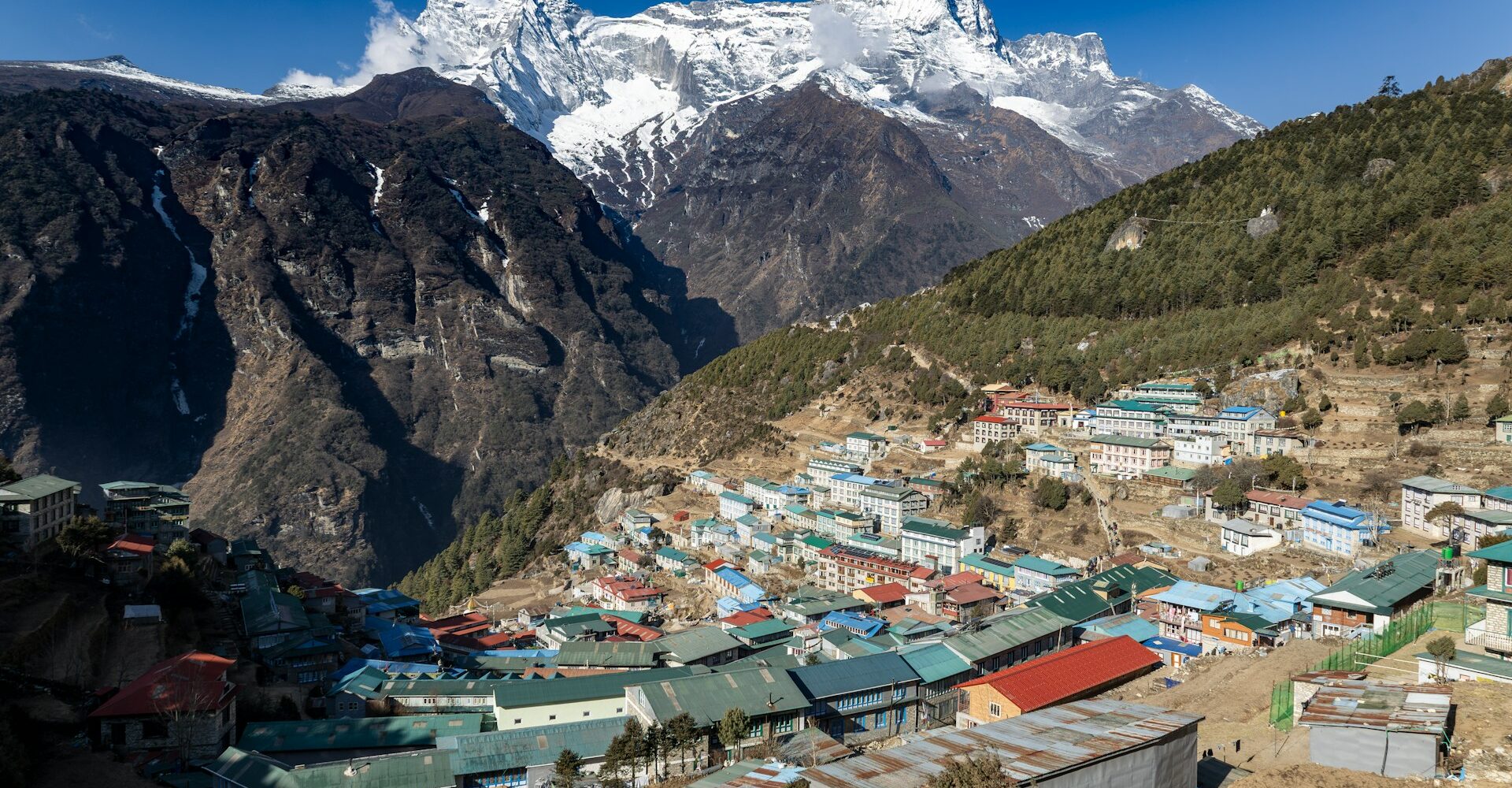
For most trekkers heading to the Everest region, Namche Bazaar is simply a place to catch their breath before pushing higher. But this vibrant Sherpa town is far more than a rest stop. Nestled in the heart of the Khumbu, it’s a cultural hub, a historic trading post, and a destination in its own right—a place where Himalayan hospitality meets breathtaking mountain views. Welcome to the “Sherpa capital.”
📍 Where is Namche Bazaar on the Map of Nepal?
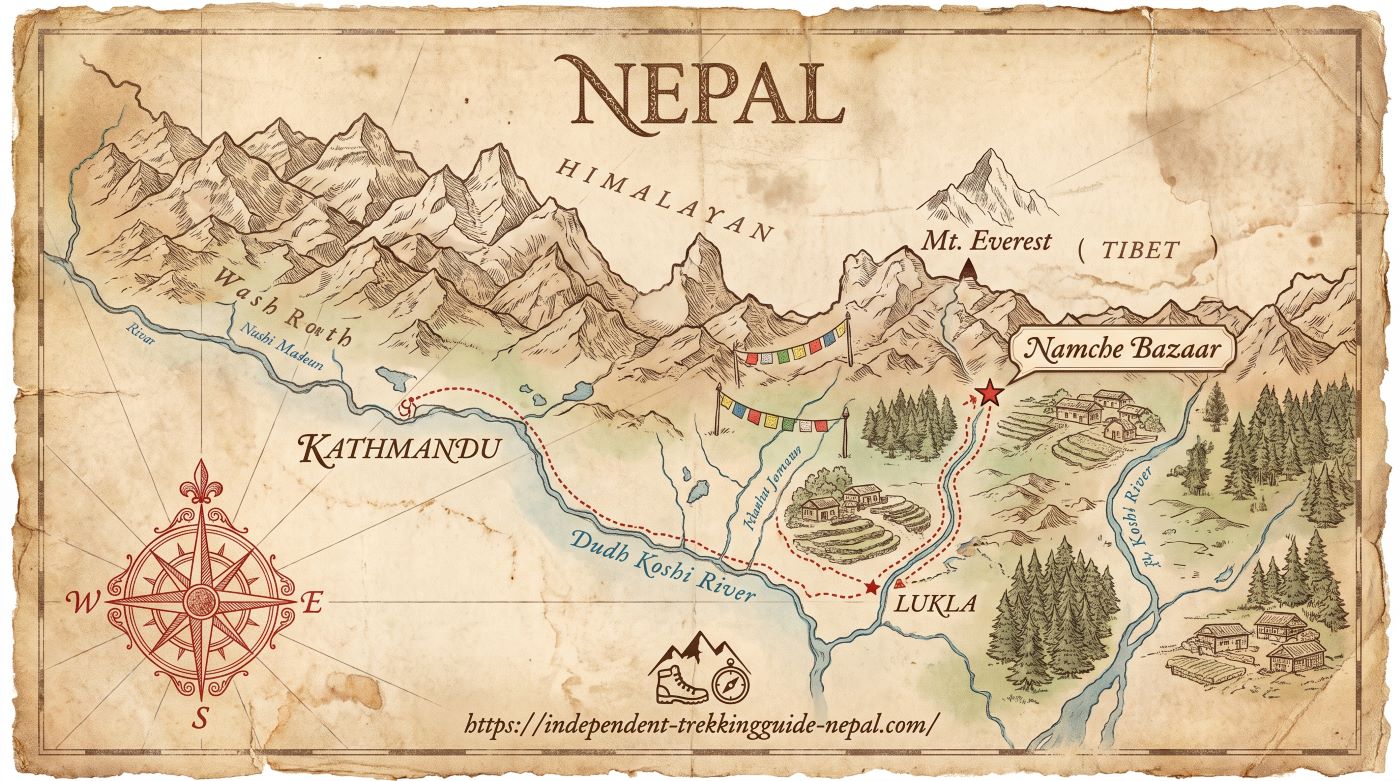
Namche Bazaar is located in northeastern Nepal within the Solukhumbu District of Koshi Province. It sits at the heart of the Khumbu region, the gateway to Mount Everest.
Coordinates: 27°49′N 86°43′E
Distance from Kathmandu: approximately 137 km (85 miles) northeast by air.
Nearest airport: Tenzing-Hillary Airport in Lukla, located 13 km south of Namche.
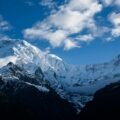
The town is built into the side of a hill, giving it a distinctive amphitheater-like appearance. Its unique geography makes it visible from afar—a sprawling village clinging to the mountainside, surrounded by giant peaks like Kongde Ri (6,187 m) to the west and Thamserku (6,623 m) to the east.
Planning your trip to Nepal? Before you go, make sure you’re fully prepared by reading our comprehensive guide on things to know before traveling to Nepal , which covers visa updates, trekking permit rules, and essential cultural etiquette for 2026.
🏔️ What is Namche Bazaar Famous For?
Namche Bazaar is legendary for several reasons:
The Sherpa Capital
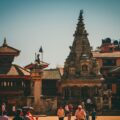
Namche is the cultural heart of the Sherpa people. It’s a living museum of their traditions, resilience, and world-famous mountaineering heritage. Walking its stone-paved streets, you’ll see prayer flags fluttering, chortens (stupas) tucked into corners, and locals going about their daily lives. A visit to the Sherpa Culture Museum at the Sagarmatha National Park headquarters offers deep insight into their way of life.
A Historic Trading Hub
For centuries, Namche Bazaar was a crucial stop on the trans-Himalayan trade route between Nepal and Tibet. Traders would barter goods like salt, wool, and Buddhist artifacts here. This legacy continues every Saturday with its famous weekly market, where traders from Tibet and neighboring villages set up stalls, creating a vibrant atmosphere.
The Gateway to Everest
Today, Namche is the primary staging point for expeditions to Everest and other peaks. It’s a bustling tourist hub where you can find equipment shops, bakeries, cozy lodges, Wi-Fi, and even a pool table. It’s the last major settlement where trekkers can stock up on supplies before entering the higher, more remote areas.
The Acclimatization Capital
Its elevation (~3,440 m) makes it the perfect spot to take a crucial rest day. The body needs time to adjust to the thinner air. A day spent hiking to higher vantage points around Namche helps prevent altitude sickness, making the journey ahead safer and more enjoyable.
🏞️ Namche Bazaar Elevation: The Key to Acclimatization
Namche Bazaar sits at an altitude of approximately 3,440 meters (11,290 ft) at its lowest point. This elevation is critical because it’s the threshold where altitude sickness becomes a real risk.
The town is strategically located at this altitude so trekkers can spend a couple of days acclimatizing. While resting, it’s recommended to take day hikes to higher elevations, like the Everest View Hotel (3,880 m) or the Syangboche airstrip (3,750 m), and then return to sleep in Namche. This “climb high, sleep low” strategy is the most effective way to help your body adapt to the altitude.
Understanding altitude is crucial. For a complete overview of the world’s highest peak, including its height, climbing costs, and fascinating facts, don’t miss our Mount Everest ultimate guide .
🌡️ Namche Bazaar Weather: What to Expect
The weather in Namche Bazaar is as varied as the landscape, but it follows a distinct seasonal pattern. The climate is temperate but can swing from warm, sunny days to freezing nights. Here’s a breakdown of the monthly averages:
| Month | Avg. High Temp (°F) | Monthly Rainfall (inches) | Notes |
|---|---|---|---|
| January | 37 | 0.4 | Coldest month, clear skies, snow possible. |
| February | 39 | 0.7 | Still cold, but warming slightly. |
| March | 45 | 0.9 | Spring begins, warming up, a popular time to trek. |
| April | 50 | 1.1 | Pleasant days, reliable weather, peak trekking season. |
| May | 55 | 1.3 | Warmest pre-monsoon month, temperatures can be pleasant. |
| June | 61 | 3.8 | Monsoon starts, warmer but with significant rainfall. |
| July | 59 | 6.1 | Wettest month, heavy rain, fewer trekkers. |
| August | 61 | 5.7 | Still very wet, but can offer clear views after rain. |
| September | 52 | 3.2 | Monsoon begins to recede, one of the best trekking months. |
| October | 46 | 1.5 | Classic autumn weather: clear, crisp, and stunning views. |
| November | 43 | 0.2 | Dry and cold, clear skies, excellent for trekking. |
| December | 37 | 0.5 | Very cold, but offers incredible clarity and solitude. |
Quick Tip: The best times for trekking are generally spring (March-May) for blooming rhododendrons and autumn (September-November) for the most stable, clear weather.
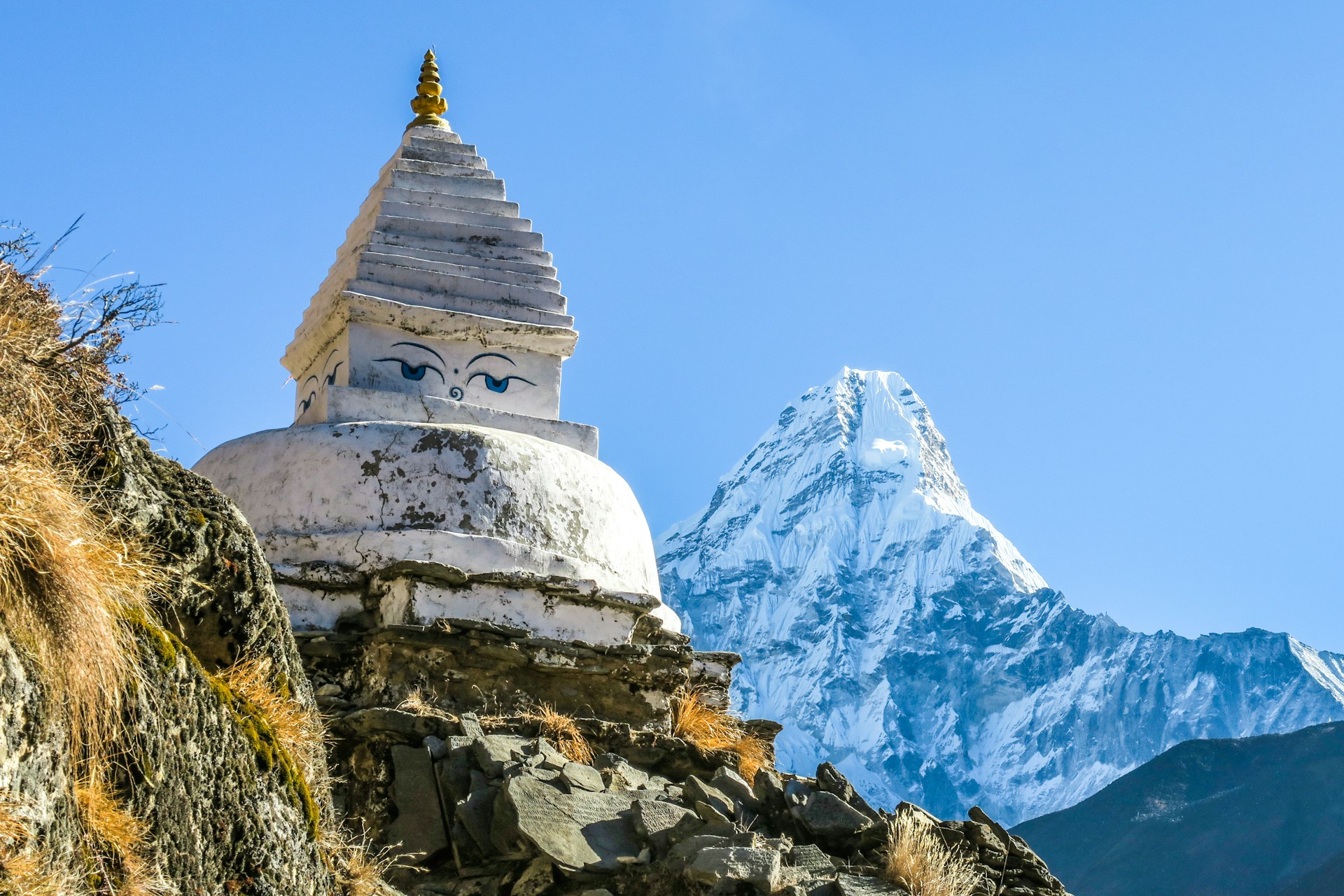
Photo by Sebastian Pena Lambarri on Unsplash
🥾 How Do I Get to Namche Bazaar from Kathmandu?
You can’t drive directly to Namche. The journey is an adventure in itself, and you have a few options, each with its own vibe:
Option 1: The Classic Flight & Trek (The Shortest & Most Popular)
By Air: Take a 30-35 minute flight from Kathmandu to the famous Tenzing-Hillary Airport in Lukla (2,860 m). (Note: During peak seasons, flights may operate from Ramechhap airport, requiring a 4-5 hour drive from Kathmandu).
The Trek: From Lukla, it’s a two-day trek to Namche. The route passes through villages like Phakding and Monjo, enters the Sagarmatha National Park, and crosses the thrilling Hillary Suspension Bridge.
Total Time: ~2 days.
Option 2: The Helicopter Transfer (The Fastest & Most Luxurious)
By Helicopter: For those short on time or looking for a spectacular entry, a direct helicopter flight from Kathmandu to Namche takes about 45 to 60 minutes.
The Experience: You’ll soar over the Himalayas, landing directly in Namche. It’s the safest and easiest way to reach the town.
Total Time: ~1 hour.
Option 3: The Scenic Drive & Trek (The Budget-Friendly & Adventurous)
By Road: Take a 10-12 hour bus or jeep ride from Kathmandu to Salleri, the district headquarters of Solukhumbu.
The Trek: From Salleri, you’ll trek for about 5-6 days through beautiful, less-crowded villages like Ringmo, Nunthala, and Kharikhola to reach Namche.
Total Time: ~6 days.
Option 4: The Historic Jiri Route (The Classic “Old School” Trail)
The Route: The historic route taken by early Everest expeditions. It involves a drive to Jiri followed by a 7-9 day trek to Namche. It’s a challenging but immensely rewarding journey that offers a true, immersive Himalayan experience.
Total Time: ~9-10 days.
Need a broader perspective? The Himalayas are a vast and magnificent range. Learn more about their location, the incredible wildlife that calls them home, and the many trekking options available in our complete Himalayas guide .
🚶♂️ How Far is Namche Bazaar from Lukla?
The distance from Lukla to Namche Bazaar is roughly 13 km (8 miles) , but the trek is far more demanding than the distance suggests.
It typically takes two days of walking to complete. The trail involves significant ups and downs, crossing suspension bridges and climbing steadily. Trekkers usually stop overnight in Phakding before making the challenging final ascent to Namche. Many trekkers report walking over 21 km on the final trek back down to Lukla, a day that can take 7-8 hours.
🔭 Can You See Everest from Namche Bazaar?
Yes, you absolutely can! While Everest itself is somewhat hidden from the main square, a short hike is all it takes to bring the world’s highest peak into view.
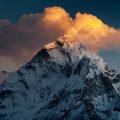
Best Viewpoints: The most popular spot is the Everest View Hotel, perched on a ridge at 3,880 m. A morning hike there rewards you with a breathtaking panorama that includes Everest, Ama Dablam, Lhotse, and Nuptse.
The View: From this vantage point, Everest (8,848.86 m) appears as the supreme ruler of the range, flanked by its neighboring giants. The sight of its summit catching the first light of dawn is an unforgettable experience.
🏕️ How Many Days from Namche Bazaar to Everest Base Camp?
The trek from Namche Bazaar to Everest Base Camp (EBC) is a journey of about 7 to 8 days one-way, covering roughly 65 km. Here’s a typical breakdown:
| Day | Route | Notes |
|---|---|---|
| 1 | Namche to Tengboche | A long day (~9.16 km) with a steep descent and ascent to the monastery. |
| 2 | Tengboche to Dingboche | Continue gaining altitude into the Imja Valley. |
| 3 | Acclimatization in Dingboche | A crucial rest day to adjust to the high altitude. |
| 4 | Dingboche to Lobuche | Trek through the memorial site for fallen climbers. |
| 5 | Lobuche to Gorak Shep | Reach the highest permanent settlement. |
| 6 | Gorak Shep to EBC & back | A 2-3 hour hike to EBC and back to Gorak Shep for the night. |
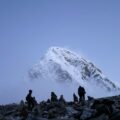
| 7 | Hike to Kala Patthar & descend | Climb Kala Patthar (5,545m) for the best sunrise views, then descend to Pheriche or Namche. |
Important Note: This is a strenuous trek at high altitude. Acclimatization days are not optional—they are essential for safety.
Short on time? If the full EBC trek is too long, consider the 7-day Everest View Trek. This condensed adventure offers spectacular close-up views of Everest and the Himalayas, immersion in Sherpa culture, and a visit to the sacred Tengboche Monastery—all without the demands of a longer, high-altitude expedition. It’s the perfect introduction to the region. Learn more about the Everest View Trek here .
✨ Beyond the Gateway: What Else Makes Namche Special?
Day Hikes: The surrounding valleys are perfect for exploration. A trek to Thame (3,820m), the historic village of legendary Sherpa climbers, or a hike up the ridge towards Kongde Ri offers incredible solitude and views, far from the main trail crowds.
Local Life: Visit a local family’s home for some butter tea and traditional bread. It’s an authentic glimpse into Sherpa hospitality that no museum can replicate.
The Atmosphere: There’s a palpable energy in Namche—a mix of cultures, languages, and shared ambitions. It’s a place where you can enjoy a fresh pastry in a bakery, gear up in a mountaineering shop, and soak in the spirit of the Himalayas all at once.
Namche Bazaar is not just a stop on the trail; it’s the heartbeat of the Khumbu. It’s where the mountain journey truly begins, not just physically, but culturally and emotionally. So, when you get there, don’t just sleep—experience it.