
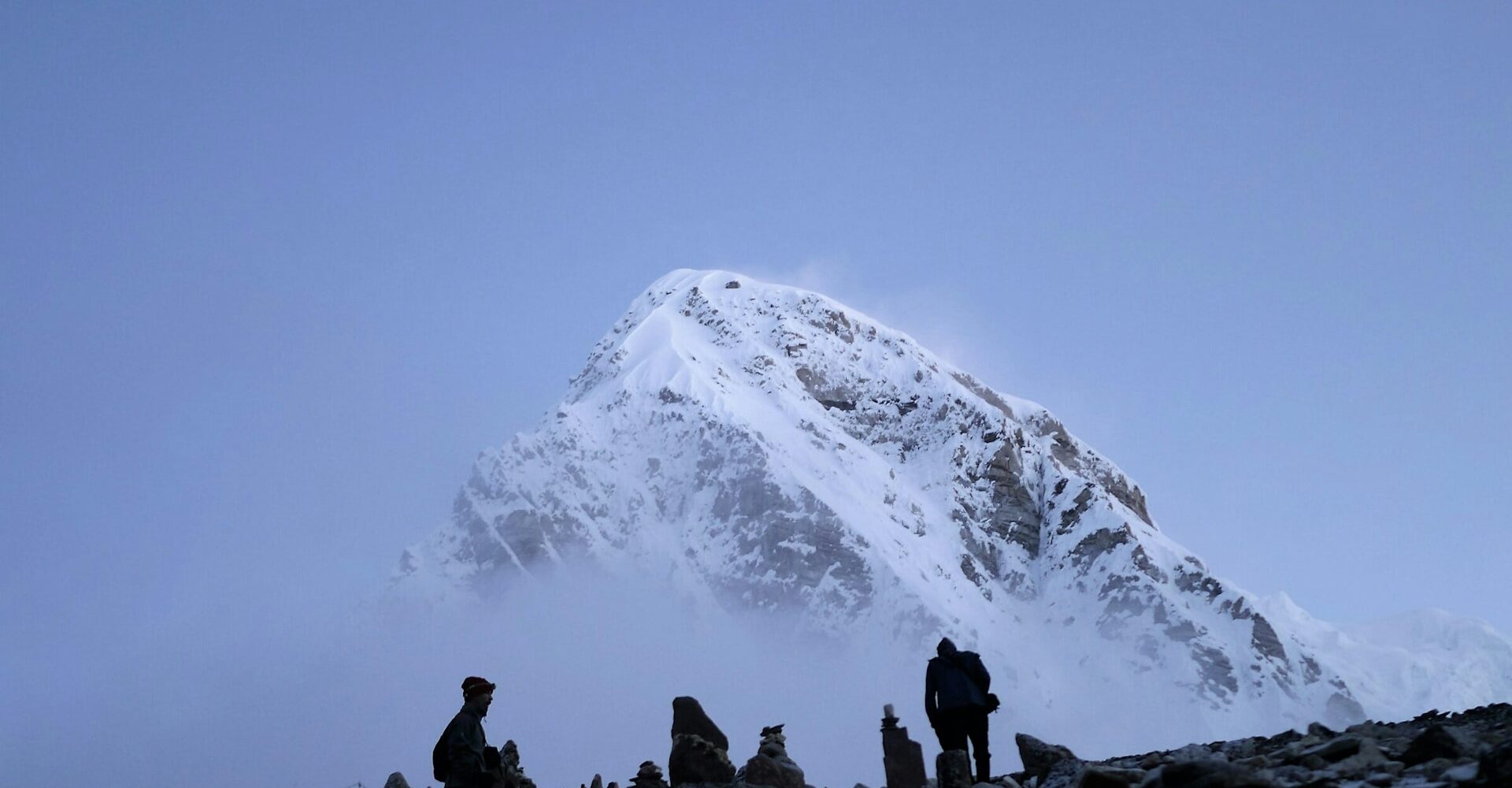
Rising above the clouds at the border of Nepal and Tibet, Mount Everest is the tallest mountain on Earth. Known as Sagarmatha in Nepali and Chomolungma in Tibetan — both meaning “Goddess Mother of the Universe” — Everest has captivated explorers, scientists, and adventurers for centuries. This guide answers every major question about the world’s highest peak.
Table of Contents
- How Tall Is Mount Everest?
- How High Is Everest in Miles?
- Where Is Mount Everest Located?
- Which Country Is Mount Everest In?
- How Was Mount Everest Created?
- How Cold Is Mount Everest?
- How Much Does It Cost to Climb Everest?
- How Many People Have Climbed Mount Everest Successfully?
- How Many People Climb Mount Everest Each Year?
- Wildlife on Mount Everest
- Fascinating Facts About Mount Everest
How Tall Is Mount Everest?
Mount Everest stands at an official height of 8,848.86 meters (29,031.7 feet) above sea level. This measurement was confirmed by a joint Nepal–China survey in 2020, adding 86 centimetres to the previously accepted figure thanks to more accurate GPS technology.
| Measurement | Value |
|---|---|
| Height in Meters | 8,848.86 m |
| Height in Feet | 29,031.7 ft |
| Height in Miles | 5.49 miles |
| Height in Kilometres | ~8.85 km |
Everest is shaped like a three-sided pyramid. Its three faces — the North Face above Tibet, the Southwest Face above Nepal, and the East Face — each offer different climbing routes with varying levels of difficulty.
Did you know? Everest is not the tallest mountain from base to summit. That record belongs to Mauna Kea in Hawaii, which extends over 10,000 m from its ocean floor base. But measured from sea level, Everest stands alone.
How High Is Everest in Miles?
Mount Everest is approximately 5.49 miles high. Here’s how that compares to things you might recognise:
- Commercial airplanes cruise at 6–7 miles altitude — just above Everest’s peak
- The summit sits in the “death zone” where oxygen is only 33% of sea-level concentration
- Driving 5.49 miles on a flat road takes roughly 8 minutes — Everest takes climbers two months
- Everest is 1.7 times taller than Denali, North America’s highest peak (6,190 m)
- From Base Camp (5,364 m), the vertical rise to the summit is about 3.1 miles
Where Is Mount Everest Located?
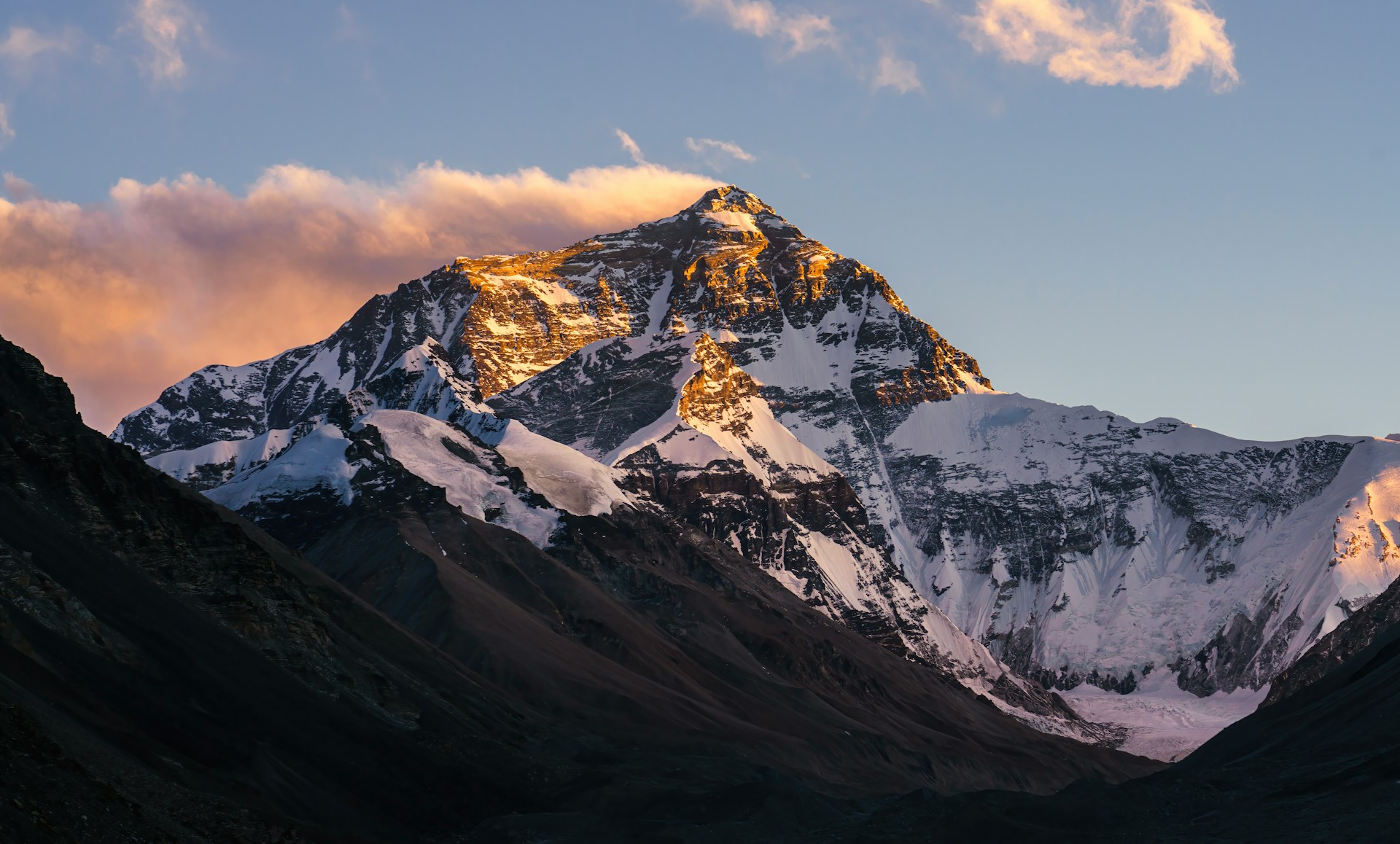
Mount Everest is located in the Mahalangur Himal sub-range of the Himalayas, on the border between Nepal and the Tibet Autonomous Region of China. Its coordinates are 27°59′N, 86°56′E.
The mountain sits within two protected areas:
- Sagarmatha National Park on the Nepalese side (a UNESCO World Heritage Site)
- Qomolangma National Nature Preserve on the Tibetan side
The nearest major city is Kathmandu, Nepal, roughly 160 km (100 miles) to the southwest.
How to Reach Everest Base Camp
- Fly from Kathmandu to Lukla airport (one of the world’s most dramatic mountain runways)
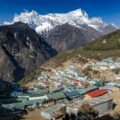
- Trek 12–14 days through the Khumbu Valley via Namche Bazaar
- Pass through Tengboche Monastery and the Khumbu Icefall viewpoints
- Arrive at South Base Camp at 5,364 m (17,598 ft)
The Tibetan North Base Camp is accessible by road from Lhasa via Shigatse.
Which Country Is Mount Everest In?
Mount Everest sits on the border between Nepal and China (Tibet Autonomous Region). The summit lies directly on this international boundary, technically belonging to both nations.
| Side | Country | Route | % of Climbers |
|---|---|---|---|
| South | Nepal | South Col (via Khumbu Icefall) | ~91% |
| North | China (Tibet) | North Ridge | ~9% |
Nepal calls the mountain Sagarmatha and issues climbing permits for the south side. China administers the north face through Tibet. The English name honours Sir George Everest, the British Surveyor General of India who first recorded the mountain’s coordinates, though he ironically never saw Everest himself.
How Was Mount Everest Created?
Everest was formed by the collision of the Indian and Eurasian tectonic plates, which began approximately 50–60 million years ago. Before this collision, the region lay beneath the ancient Tethys Sea.
Everest’s Geological Timeline
| Period | Event |
|---|---|
| ~60 million years ago | Indian plate begins colliding with Eurasian plate |
| ~50 million years ago | Himalayan range begins rising from the Tethys Sea floor |
| ~25 million years ago | Major uplift accelerates; Everest takes shape |
| 2015 | Nepal earthquake causes mountain to shrink ~2.5 cm |
| 2020 | Joint Nepal–China survey sets official height at 8,848.86 m |
| Today | Mountain still grows ~4–5 mm per year from tectonic uplift |
As the ocean floor was thrust upward, it carried ancient marine sediment with it. This is why fossils of sea creatures are found in the summit rocks — the world’s highest peak is built from ancient seabed.
How Cold Is Mount Everest?
Everest is brutally cold year-round. Temperatures vary significantly by altitude and season.
| Location / Season | Temperature |
|---|---|
| Summit — January (average) | −36°C (−33°F) |
| Summit — July (average) | −19°C (−2°F) |
| Wind chill at summit (extreme) | −60°C (−76°F) |
| Base Camp (5,364 m) — daytime | −10°C to +5°C |
| Peak jet-stream winds | Up to 285 km/h (177 mph) |
The Two Climbing Windows
Climbers target two narrow seasonal windows when the jet stream shifts away from the summit:
- Spring season (April–May): The most popular window; widest summit opportunities before the monsoon
- Autumn season (September–October): Shorter windows; fewer crowds
Even within these windows, summit-day conditions can change within hours. Oxygen levels at the summit are only one-third of what they are at sea level, making every breath a struggle even with bottled oxygen.
How Much Does It Cost to Climb Mount Everest?
Climbing Everest is one of the world’s most expensive adventures. Total costs in 2025 range from $40,000 to over $100,000, with luxury Western-guided expeditions exceeding $200,000.
2025 Cost Breakdown
| Expense | Estimated Cost (USD) |
|---|---|
| Nepal government permit (spring, south side) | $15,000 |
| Expedition / guide package | $20,000 – $85,000 |
| Supplemental oxygen (rented per bottle) | $3,000 – $5,000 |
| Personal gear (boots, suit, axes, bags) | $5,000 – $12,000 |
| Flights and accommodation (Kathmandu + trek) | $3,000 – $6,000 |
| Travel insurance (helicopter rescue cover) | $300 – $600 |
| Total (typical range) | $40,000 – $100,000+ |
Note: Nepal raised the spring-season climbing permit from $11,000 to $15,000 per person, effective September 2025 — a 36% increase. Off-season permits (autumn: $7,500; winter: $3,750) remain cheaper but come with harsher conditions.
Nepal also now requires all climbers to have previously summited a peak above 7,000 m before attempting Everest.
How Many People Have Climbed Mount Everest Successfully?
As of late 2024, more than 7,269 individual climbers have successfully reached the summit, accounting for over 12,884 total ascents in all (many Sherpas have summited dozens of times).
Key Summit Records
| Record | Detail |
|---|---|
| First successful summit | Sir Edmund Hillary & Tenzing Norgay — May 29, 1953 |
| Most summits by one person | Kami Rita Sherpa — 31 times (as of 2024) |
| Fastest summit from Base Camp | Pemba Dorjie Sherpa — 8 hours 10 minutes (2004) |
| Oldest person to summit | Yuichiro Miura (Japan) — age 80, in 2013 |
| Youngest person to summit | Jordan Romero (USA) — age 13, in 2010 |
| Without supplemental oxygen | 229 climbers (~1.7% of all summiteers) |
| Total recorded deaths | 335 (as of December 2024) |
| Bodies remaining on mountain | 200+ (recovery is near-impossible at altitude) |
Has Everest Become Safer?
Yes — significantly. The death rate has dropped from roughly 14.5% of attempts before 2000 to just 1.4% from 2000–2024, thanks to higher Sherpa-to-climber ratios, improved oxygen systems, better weather forecasting, and modern equipment.
How Many People Climb Mount Everest Each Year?
Between 700 and 1,000 climbers attempt to summit Everest every year, with success rates ranging from 50% to 80% during good spring seasons.
Recent Annual Trends
| Year | Notable Event |
|---|---|
| 1953 | First ever summit (Hillary & Tenzing) |
| 2019 | Record queues in the death zone; 11 deaths |
| 2020 | Mountain closed due to COVID-19 pandemic |
| 2023 | Record 18 deaths — worst year in recent history |
| 2024 | 861 successful summits; 91% from Nepal south side |
| 2025 | 700–800 summits projected |
Overcrowding remains a major concern. Nepal has responded with:
- Mandatory prior experience on a 7,000 m+ peak
- Stricter waste management rules (climbers must carry waste back down)
- Higher permit fees to manage demand
- New regulations at Base Camp on pollution and behaviour
Wildlife on Mount Everest
Despite the extreme conditions, the Everest region supports a surprisingly rich ecosystem. More than 200 animal species inhabit the broader area within Sagarmatha National Park, concentrated at lower and mid-elevations. Almost no wildlife is found above 6,000 m.
Key Species
| Animal | Altitude Range | Notes |
|---|---|---|
| Snow leopard | Up to 5,500 m | Apex predator; elusive and endangered |
| Himalayan tahr | Up to 5,000 m | Wild goat-relative; common on rocky slopes |
| Blue sheep (bharal) | Up to 5,500 m | Primary prey of the snow leopard |
| Red panda | Lower forest zones | Endangered; found in rhododendron forests |
| Himalayan griffon | Up to 7,000 m | Massive vulture with 2.5 m wingspan |
| Himalayan jumping spider | Up to 6,700 m | One of Earth’s highest-living animals |
| Bar-headed goose | Migrates over summit | Crosses above 9,000 m during migration |
| Musk deer | Lower valleys | Poached for its musk gland; now protected |
Bird Life
The Sagarmatha National Park is home to over 150 bird species, including:
- Impeyan pheasant (Nepal’s national bird)
- Himalayan snowcock
- Alpine chough
- Red-billed chough
- Lammergeier (bearded vulture)
Fascinating Facts About Mount Everest
Top 10 Everest Facts
- Sea fossils at the summit — Everest was once an ocean floor; marine creature fossils are embedded in the summit limestone
- Still growing — the mountain rises ~4–5 mm per year from ongoing tectonic uplift
- Two months to summit — most climbers spend 6–8 weeks acclimatising before their summit push
- 8,000 kg of waste per season — human waste, oxygen canisters, and gear left on the mountain annually
- The death zone — above 8,000 m, the human body cannot acclimatise and begins to deteriorate
- 200+ bodies remain — recovery is logistically near-impossible at those altitudes
- Named after a man who never saw it — Sir George Everest opposed the use of his name for the mountain
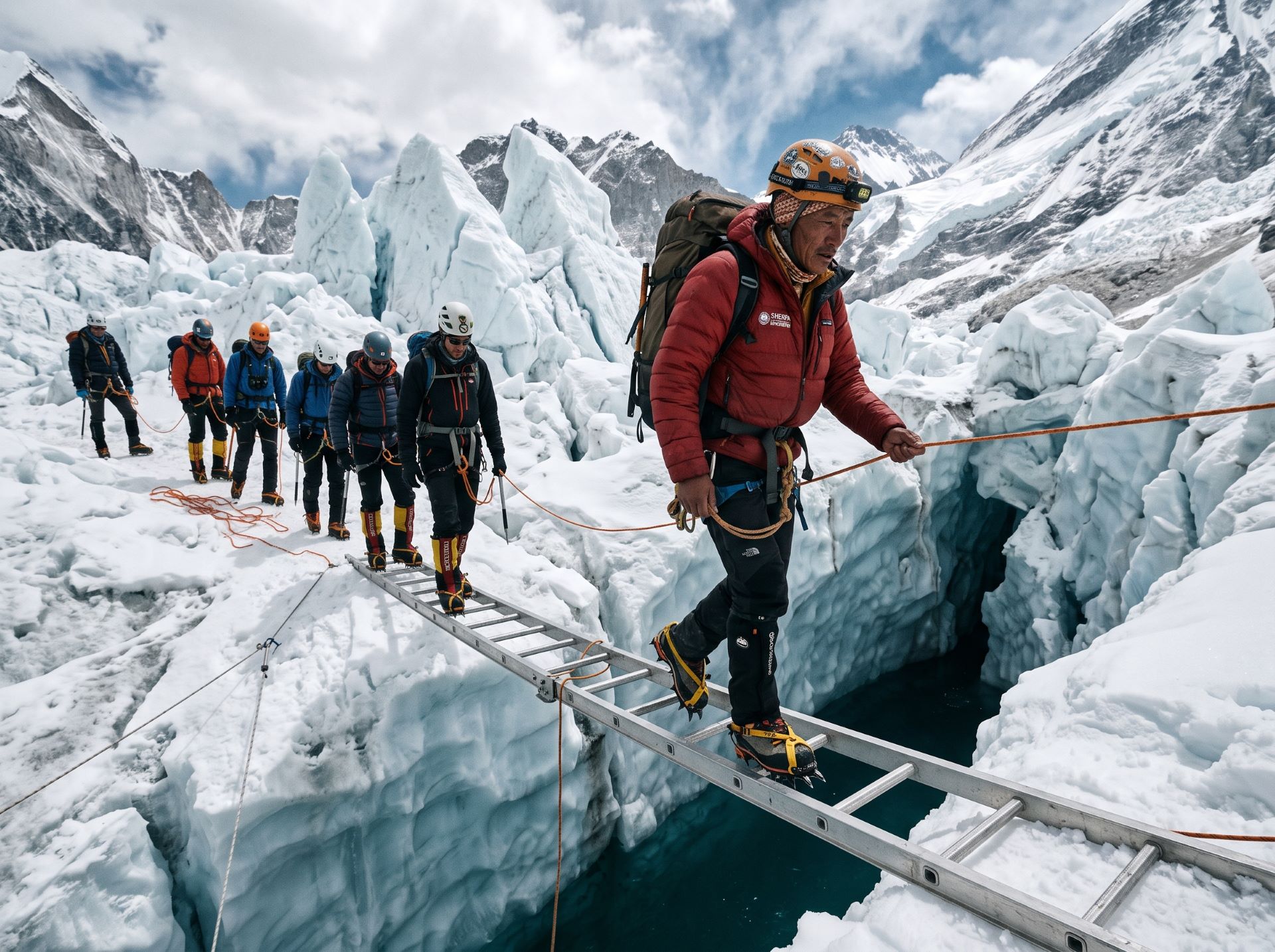
- The Khumbu Icefall is the most dangerous section — a constantly shifting glacier that climbers must cross multiple times
- Weather forecasting changed everything — modern satellite forecasting allows climbers to identify precise summit windows
- Sherpa culture is sacred — many Sherpas perform a puja ceremony at Base Camp to seek the mountain’s blessing before each ascent
Everest by the Numbers
| Fact | Number |
|---|---|
| Age of the mountain | ~50–60 million years |
| Annual growth rate | 4–5 mm/year |
| Summit oxygen level | 33% of sea level |
| Climbing seasons per year | 2 (spring and autumn) |
| Permit fees raised in 2025 | $15,000 (up from $11,000) |
| Countries with climbers | 50+ nations |
| Sherpas with 10+ summits | 100+ |
Summary
Mount Everest is far more than the world’s tallest mountain — it is a geological wonder, a wildlife sanctuary, a cultural icon for the Sherpa people, and the ultimate test of human endurance. Whether you plan to trek to Base Camp or simply want to understand this remarkable place, the facts speak for themselves: Everest is a mountain that continues to grow, inspire, and humble everyone who encounters it.
Sources: Nepal Tourism Department, Himalayan Database, Britannica, Outside Magazine, The Manual (2024–2025 data)

0 Comments