Nepal doesn’t just celebrate festivals—it lives them. With over 125 ethnic groups and a spiritual fabric woven from Hinduism, Buddhism, and ancient animist traditions, this Himalayan nation arguably has more festivals than days on the calendar. To visit during a major festival is to see Nepal at its most vibrant, generous, and unguarded.
Whether you’re timing your trek around a celebration or simply curious about the cultural heartbeat of the country, this guide covers the most significant festivals in Nepal, what they mean, and how you can experience them respectfully.
“In Nepal, every day is a celebration. Some days are just louder than others.” — Anonymous local saying
Why Festivals in Nepal Matter
Before listing dates, it’s worth understanding why festivals are so central to Nepali life. They are not merely public holidays. They are:
- Spiritual anchors: Most festivals mark cosmic victories—good over evil, light over darkness, life over death.
- Family reunions: During Dashain, millions of Nepalis travel home, creating the world’s largest internal migration for a festival.
- Cultural preservation: Masked dances, ancient songs (Deusi/Bhailo), and rituals keep centuries-old traditions alive.
The Big Three: Nepal’s Most Important Festivals
1. Dashain: The Longest and Holiest Festival
Dashain (also spelled Dasain or Vijaya Dashami) is the undisputed king of festivals in Nepal. Lasting 15 days, it usually falls in September or October (Ashwin/Kartik months), marking the victory of the goddess Durga over the demon Mahishasura.
Key Highlights:
- Ghatasthapana (Day 1): The festival begins with planting sacred jamara (barley shoots) in a sand-filled clay pot.
- Fulpati (Day 7): A ceremonial parade brings sacred flowers into the Kathmandu Valley.
- Maha Ashtami (Day 8): The night of sacrifices; the fiercest manifestation of Durga is worshipped.
- Vijaya Dashami (Day 10): The pinnacle. Elders apply tika (a mixture of rice, yogurt, and vermillion) and jamara to younger relatives’ foreheads, blessing them with prosperity. This continues for five more days.
- Kite Flying: The skies fill with kites, symbolizing that the monsoon has ended and messages to the gods to stop the rain.
Traveler’s Tip: Kathmandu empties out as everyone returns to their ancestral villages. It’s eerily quiet in the capital but incredibly festive in rural areas. This is arguably the best—or worst—time to visit, depending on whether you seek solitude or cultural immersion.
2. Tihar (Deepawali): The Festival of Lights

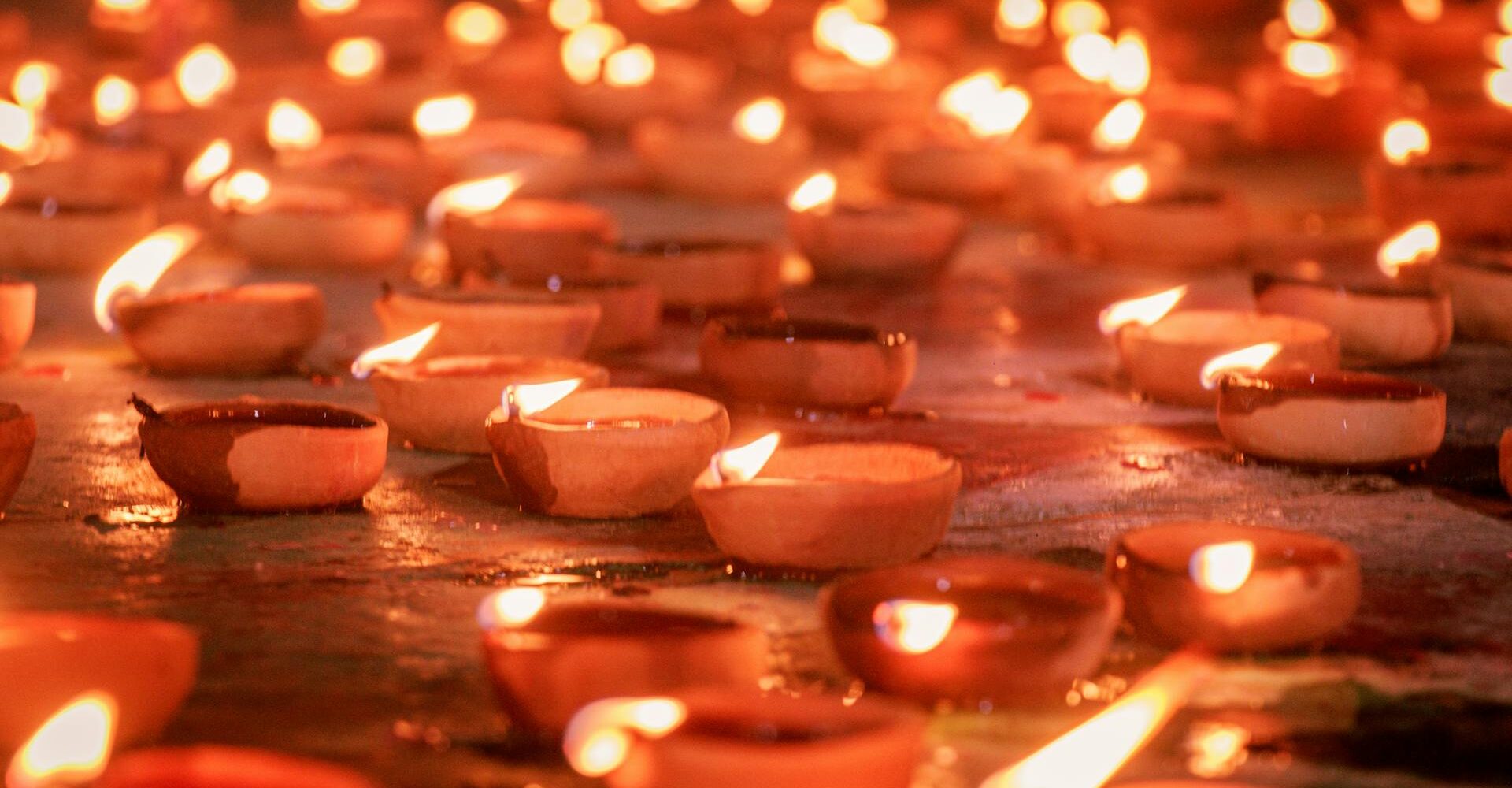
Coming just two weeks after Dashain, Tihar (October/November) is a five-day spectacle that rivals Diwali in India. Unlike Dashain’s focus on family elders, Tihar celebrates the bond between humans, animals, and the goddess Laxmi.
| Day | Name | Who Is Honored | Ritual |
|---|---|---|---|
| Day 1 | Kag Tihar | The Crow (messenger of death) | Offerings of food left on rooftops to appease crows. |
| Day 2 | Kukur Tihar | The Dog (guardian and loyal companion) | Dogs are garlanded, fed treats, and given a red tika. Even stray dogs are pampered. |
| Day 3 | Gai Tihar & Laxmi Puja | Cows (holy mother) and Goddess Laxmi | Cows are worshipped in the morning. At night, homes are illuminated with oil lamps and colorful rangoli to invite Laxmi in. |
| Day 4 | Govardhan Puja | Oxen / The Self | The Newar community celebrates Mha Puja—worshipping one’s own soul and body. |
| Day 5 | Bhai Tika | Brothers | Sisters apply tika to their brothers’ foreheads, praying for their long life. |
Unique Experience: On the evenings of Day 3 and 4, groups of young people go door-to-door singing Deusi and Bhailo—traditional folk songs. They are welcomed with money, rice, and sweets. If you’re in a Nepali neighborhood, don’t be surprised if a dancing, laughing crowd knocks on your door.
3. Holi: The Riot of Colors
In February or March (Falgun), Nepal explodes into a Technicolor water fight. Holi, or Fagu Purnima, marks spring, fertility, and the legendary pranks of Lord Krishna.
What to Expect:
- Water Balloons and Pichkaris: Children (and adults) armed with water guns soak everyone in sight.
- Colored Powder (Gulal): Strangers become friends as you smear bright pink, green, and yellow powder on each other’s faces.
- Bhang Lassi: A traditional cannabis-infused drink is legally and widely consumed on this day.
Where to Celebrate: Basantapur Durbar Square in Kathmandu is the epicenter—a heaving, joyful, chaotic mass of humanity. Pokhara’s Lakeside is more laid-back but equally colorful.
Traveler’s Tip: Wear clothes you’ll never wear again. Apply coconut oil to your skin and hair beforehand to make washing off the colors easier. Protect your eyes and phone with waterproof pouches.
The Complete Calendar: Festivals in Nepal by Season
To help you plan your trip, here is how the major festivals in Nepal spread across the lunar calendar:
| Festival | Approximate Month | Main Activity | Best Location |
|---|---|---|---|
| Maghe Sankranti | January | Eating ghee, yams, and chaku; holy bathing | Devghat, Sankhu |
| Maha Shivaratri | February/March | Fasting, all-night vigil, sadhus at Pashupatinath | Pashupatinath Temple |
| Holi | March | Color throwing, water fights | Kathmandu, Pokhara |
| Ghode Jatra | March/April | Horse racing and parades to ward off evil | Tundikhel, Kathmandu |
| Nepali New Year (Baisakh 1) | April 13/14 | Family gatherings, picnics, cultural rallies | Nationwide |
| Buddha Jayanti | April/May | Pilgrimages, butter lamp lighting at stupas | Lumbini, Boudhanath |
| Rato Machhindranath Jatra | May/June | Longest chariot procession in Nepal | Patan (Lalitpur) |
| Naag Panchami | July/August | Worshipping serpent gods; posters of snakes pasted on doors | Kathmandu Valley |
| Janai Purnima / Raksha Bandhan | August | Sacred thread changing; tying of protective thread on wrists | Patan, Kumbeshwar |
| Gai Jatra | August/September | Cow procession in memory of the dead; satire and comedy | Kathmandu Valley |
| Krishna Janmashtami | August/September | Midnight prayers marking Lord Krishna’s birth | Patan Durbar Square |
| Teej | September | Women fast and dress in red for their husbands’ long life | Pashupatinath Temple |
| Indra Jatra | September | Kumari chariot procession, Lakhe masked dance | Kathmandu Durbar Square |
| Dashain | September/October | Tika, kites, family reunions for 15 days | Nationwide |
| Tihar (Deepawali) | October/November | Five days of light, animals, and Deusi songs | Nationwide |
| Chhath | October/November | Sunrise and sunset worship of the sun at riverbanks | Janakpur, Terai region |
| Mani Rimdu | November | Colorful masked dances by monks, depicting demon defeat | Tengboche (Everest region) |
Regional and Ethnic-Specific Festivals
Beyond the national celebrations, Nepal’s ethnic tapestry creates micro-festivals that many travelers never hear about.

Losar: Tibetan New Year
Celebrated by Sherpa, Tamang, and Tibetan communities (February/March), Losar involves masked dances, thukpa (noodle soup), and firecrackers to chase away evil spirits. The Boudhanath Stupa area in Kathmandu becomes a focal point.
Chhath: The Sun Festival
Primarily celebrated by the Madhesi community in the southern Terai, Chhath is an ancient Vedic ritual of standing waist-deep in water, offering prayers to the rising and setting sun. The devotion and discipline are breathtaking to witness.
Mani Rimdu
High in the Everest region, the Tengboche Monastery hosts Mani Rimdu in autumn. Monks wear elaborate masks and perform sacred dances over 19 days, enacting the triumph of Buddhism over the ancient Bon demons.
10 Fascinating Facts About Festivals in Nepal
- Dashain moves millions. It triggers the largest mass migration within Nepal as city dwellers return to ancestral villages.
- Dogs have their own day. On Kukur Tihar, even stray dogs are garlanded, given tika, and fed treats as messengers of the death god Yama.
- The Living Goddess appears. During Indra Jatra, the Kumari—a living goddess—is wheeled through Kathmandu on a massive chariot. It’s one of the few times she’s publicly visible.
- Satire is sacred. During Gai Jatra, theatrical performances openly mock politicians, corruption, and social issues—with legal immunity for the comedians.
- Women glow in red. During Teej, thousands of women dress in crimson saris, fast without water, and dance at Pashupatinath for marital bliss.
- Nepal has its own New Year. Baisakh 1 (mid-April) is the official Nepali New Year, celebrated with processions and family feasts.
- Snakes get worshipped. Naag Panchami sees households pasting snake images on doors to appease serpent deities and protect from floods.
- Bhoto Jatra’s mystery. The Rato Machhindranath festival ends by displaying a jewel-studded vest (bhoto) whose ownership legend remains unresolved.
- Cow processions comfort the bereaved. Families who lost someone in the past year lead a cow (or a child dressed as one) through the streets during Gai Jatra.
- A single festival can last a month. The Rato Machhindranath chariot procession in Patan takes up to a month to complete, with the chariot moving a few meters daily.

Practical Tips for Experiencing Festivals in Nepal
- Book accommodation early. During Dashain and Tihar, domestic tourism surges. Hotels in regional hubs fill fast.
- Dress appropriately. For temple festivals like Shivaratri or Teej, modest clothing covering shoulders and knees is essential.
- Ask before photographing. Rituals, especially those involving grieving families (Gai Jatra) or intense devotion (Chhath), demand sensitivity.
- Participate, don’t intrude. If someone invites you for tika or daal bhaat during Dashain, accept with gratitude. It’s a genuine honor.
- Check lunar dates. Almost all festivals in Nepal follow the lunar calendar (Bikram Sambat). Exact Gregorian dates shift annually. Always verify with the Nepal Tourism Board before booking flights.
Frequently Asked Questions
Q: What is the biggest festival in Nepal?
A: Dashain is the longest and most significant of all festivals in Nepal. It lasts 15 days and marks the victory of goddess Durga over evil.
Q: Can tourists participate in Nepali festivals?
A: Yes, most festivals welcome respectful participation. During Holi, everyone is a target for colors. During Dashain, families often invite visitors for tika. Tihar’s Deusi singers welcome anyone who opens their door.
Q: When is Dashain in 2026?
A: Dashain follows the lunar calendar. In 2026, the main day (Vijaya Dashami) falls in mid-October. Always check the exact date closer to the year as it shifts annually.
Q: Is Holi safe for tourists?
A: Generally yes, but caution is needed. Avoid areas where crowds become too rowdy. Use only organic, skin-safe colors. Some tourists prefer celebrating in Pokhara, which is considered more laid-back than Kathmandu’s Basantapur.
Q: Are businesses closed during Dashain and Tihar?
A: Yes. Most government offices, schools, and many businesses close for 5–10 days. Trekking agencies operate but with reduced staff. Plan logistics like permits and transport in advance.
Conclusion
The festivals in Nepal are not performances for tourists—they are living, breathing expressions of faith that have pulsed through the Himalayas for millennia. Whether you find yourself dancing with a masked Lakhe in Kathmandu’s medieval squares, receiving a red tika blessing from a village elder, or simply watching oil lamps flicker across the valley during Tihar, these moments become permanent memories.
Come for the mountains. Stay for the festivals. Leave with a heart full of color, light, and wonder.
Ready to plan your cultural adventure? Contact us to learn more about the Himalayan experience.